Eyes up. The script waits.
Terera moves your words around the screen the way a speaker’s eyes actually move — settling on one face, turning between two, sweeping a room. It listens while you talk: pause and it waits, improvise and it holds your place until you circle back. Reading, done properly, looks like looking.
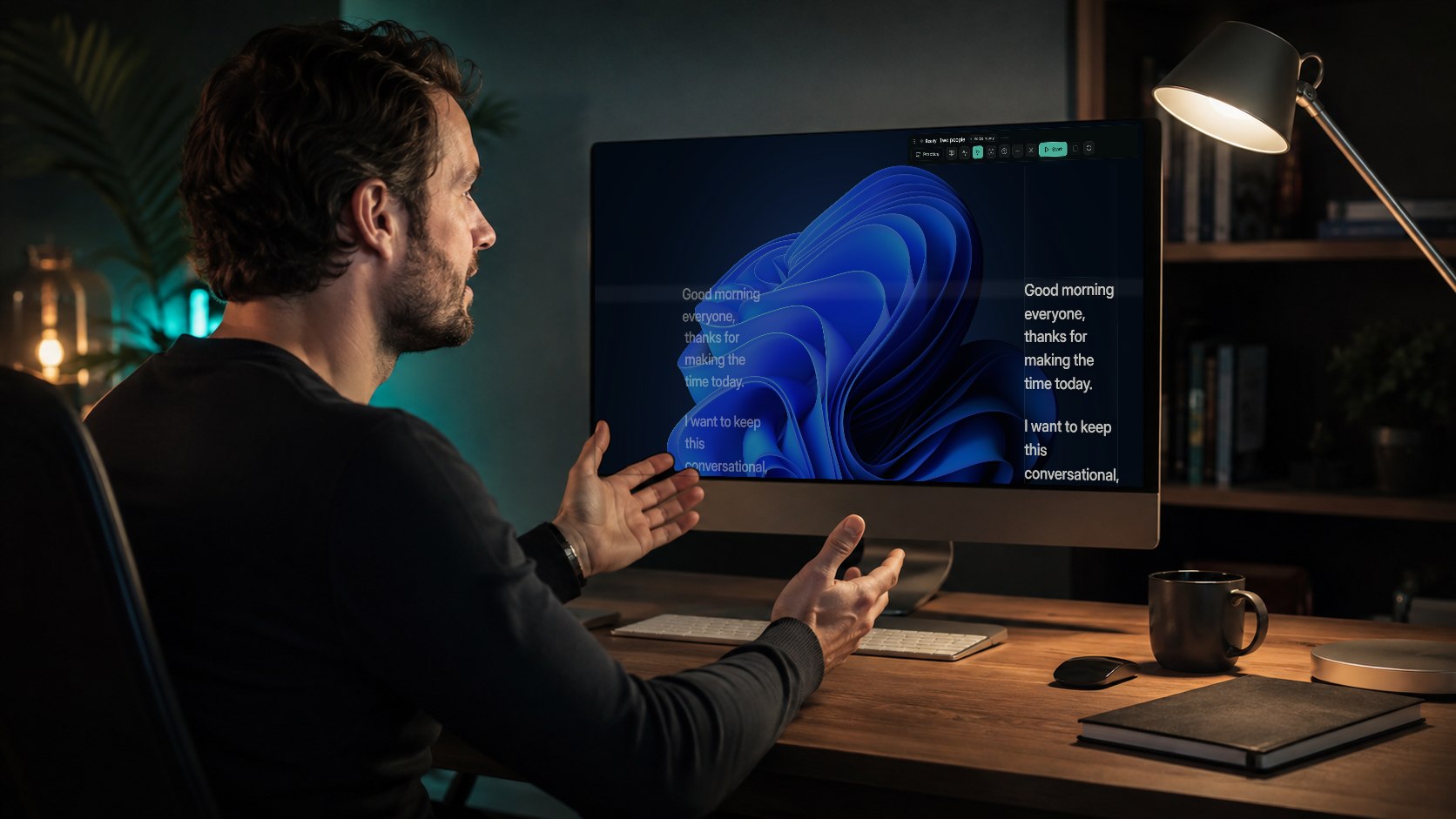
Anywhere you'd rather look up.
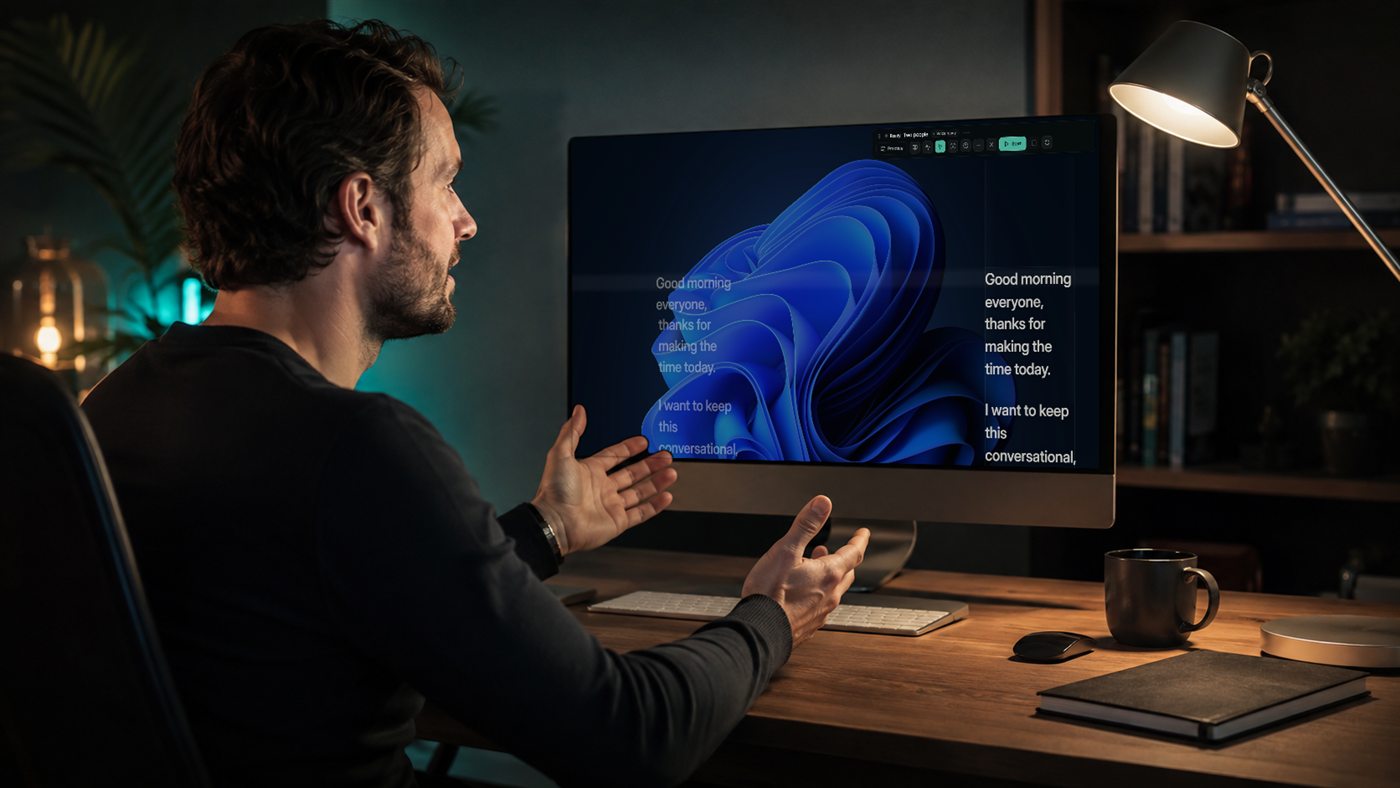
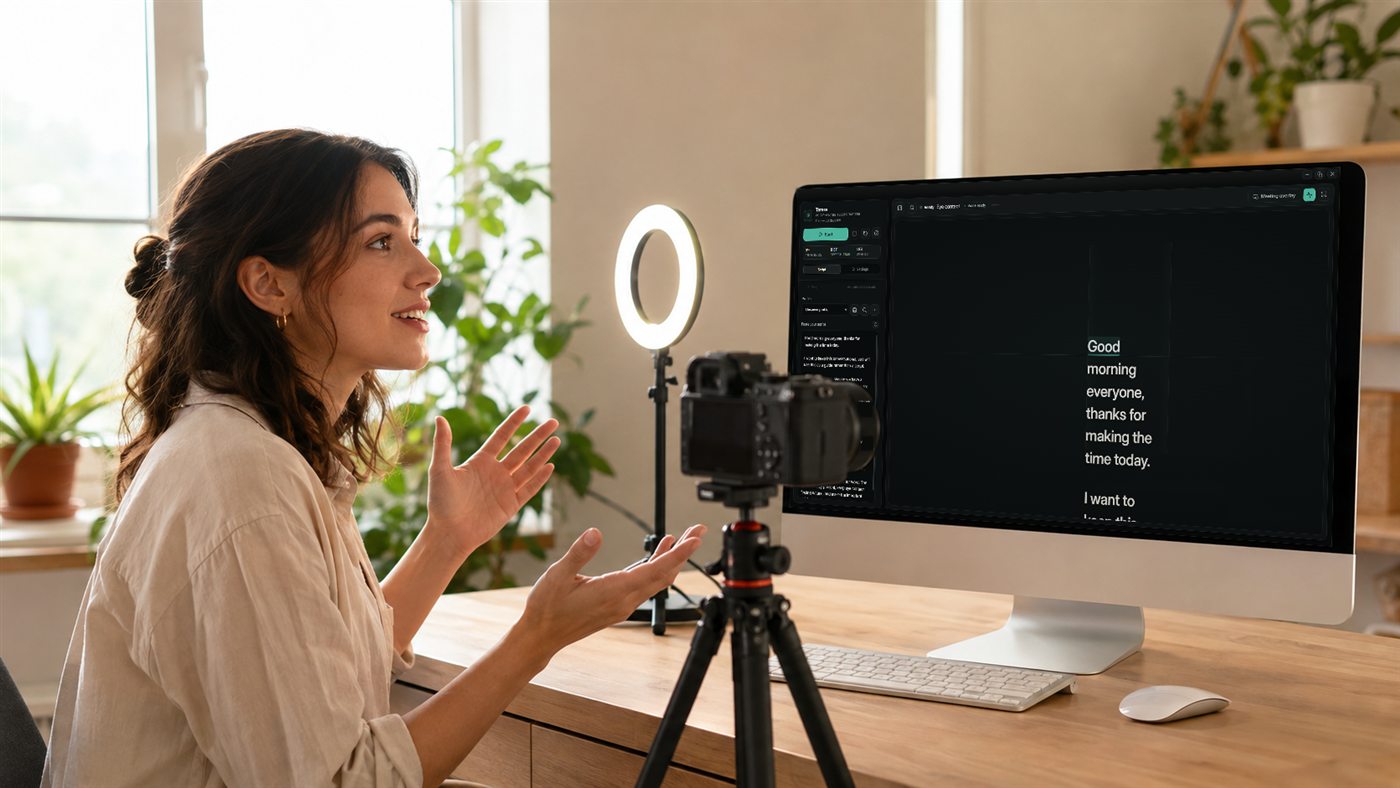
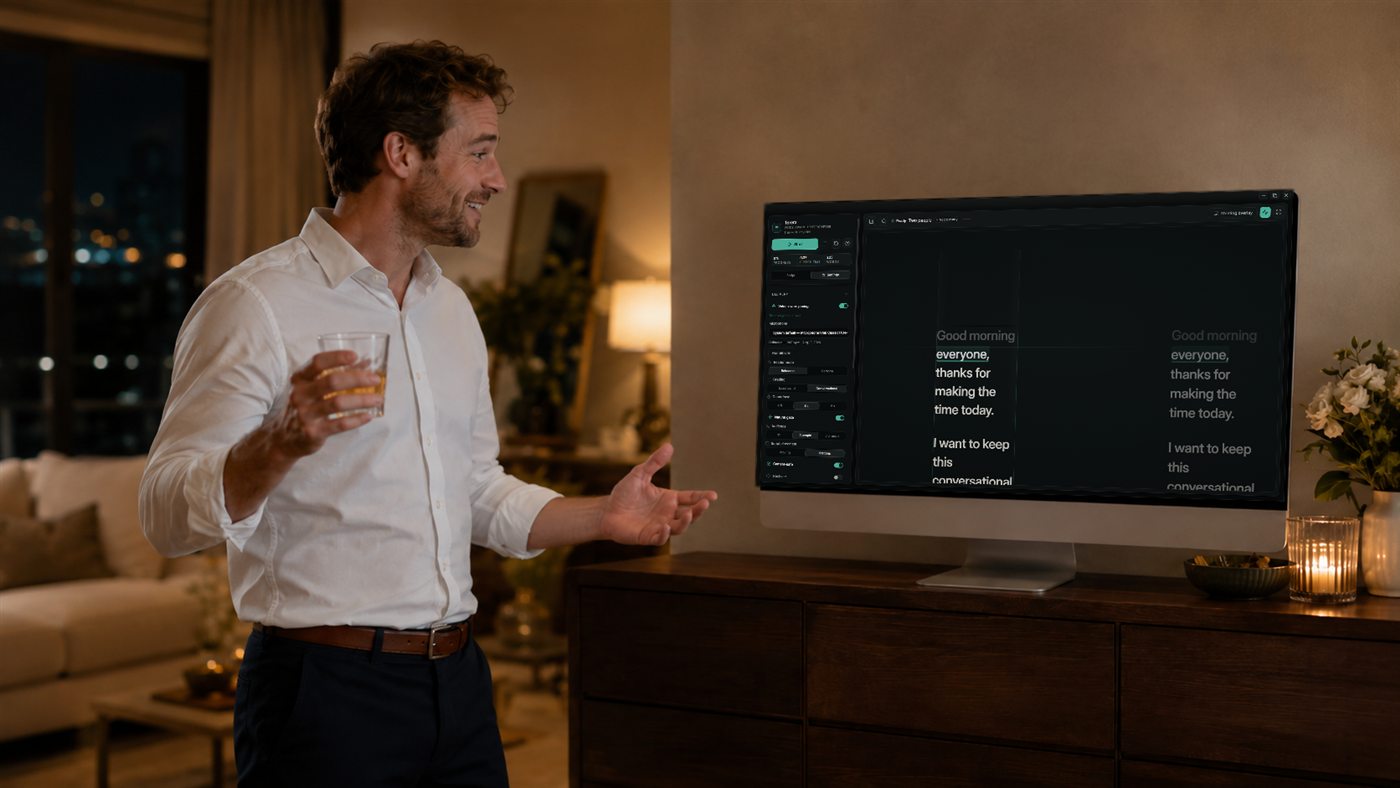
Same app in every shot — over a call, next to a camera, on a TV across the room. The script sits where your eyes should be anyway.
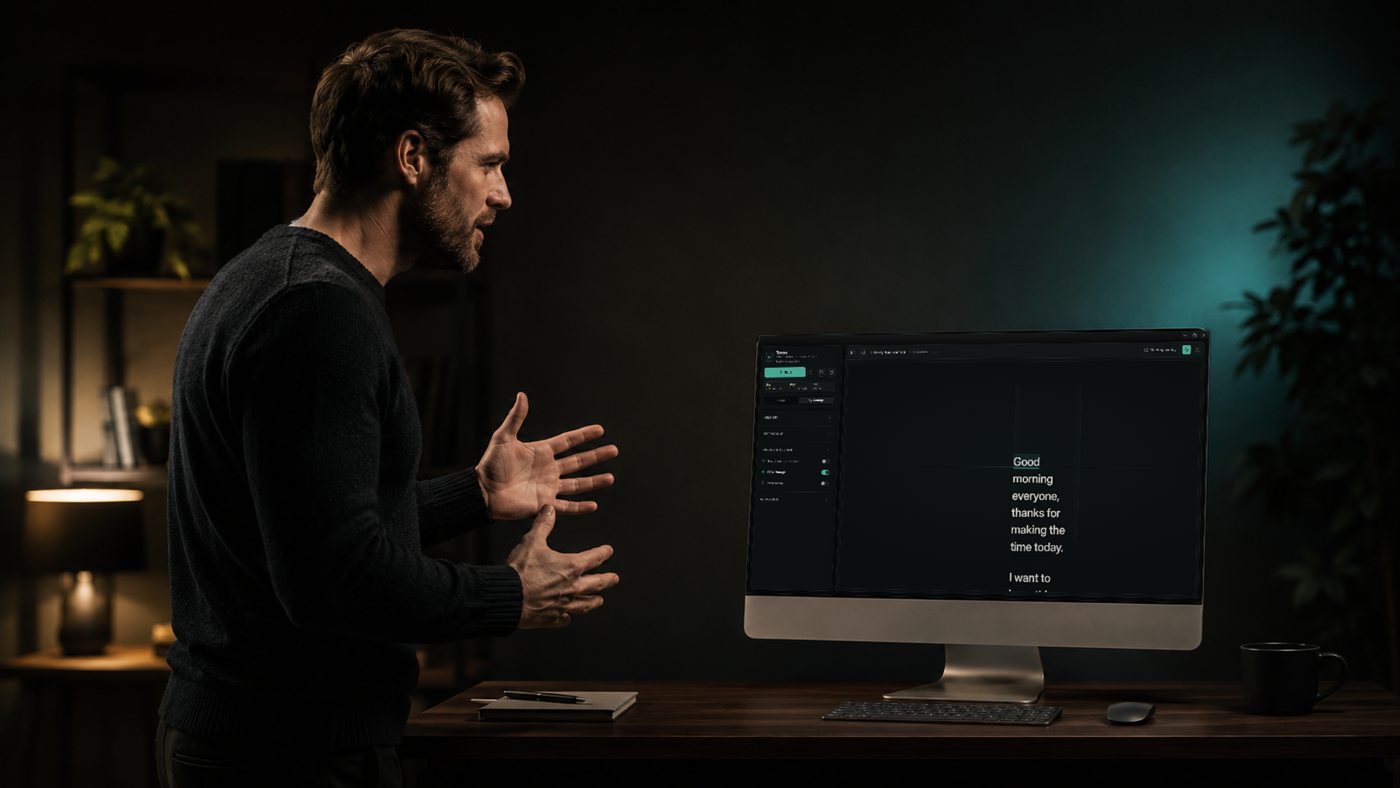
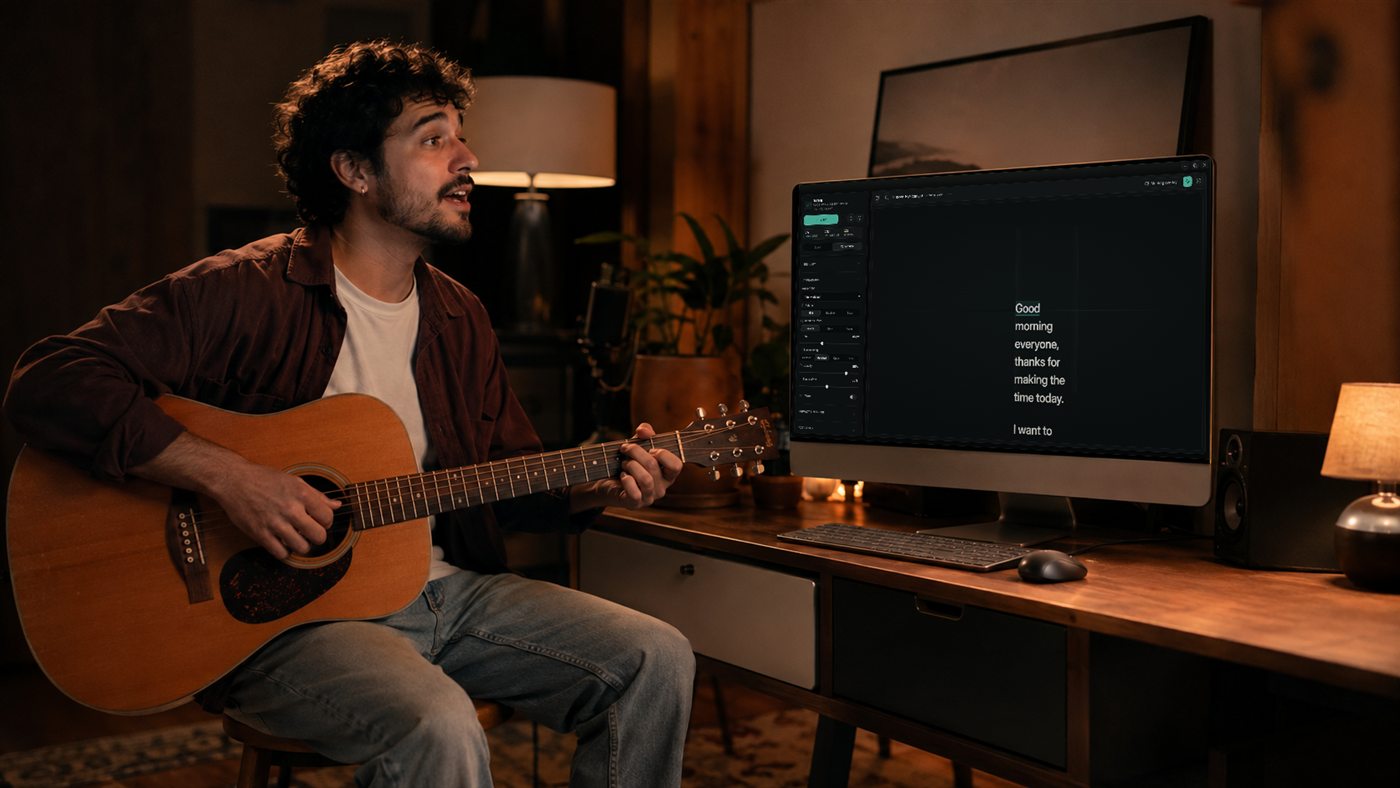
A prompter that knows who you are talking to. Because you told it.
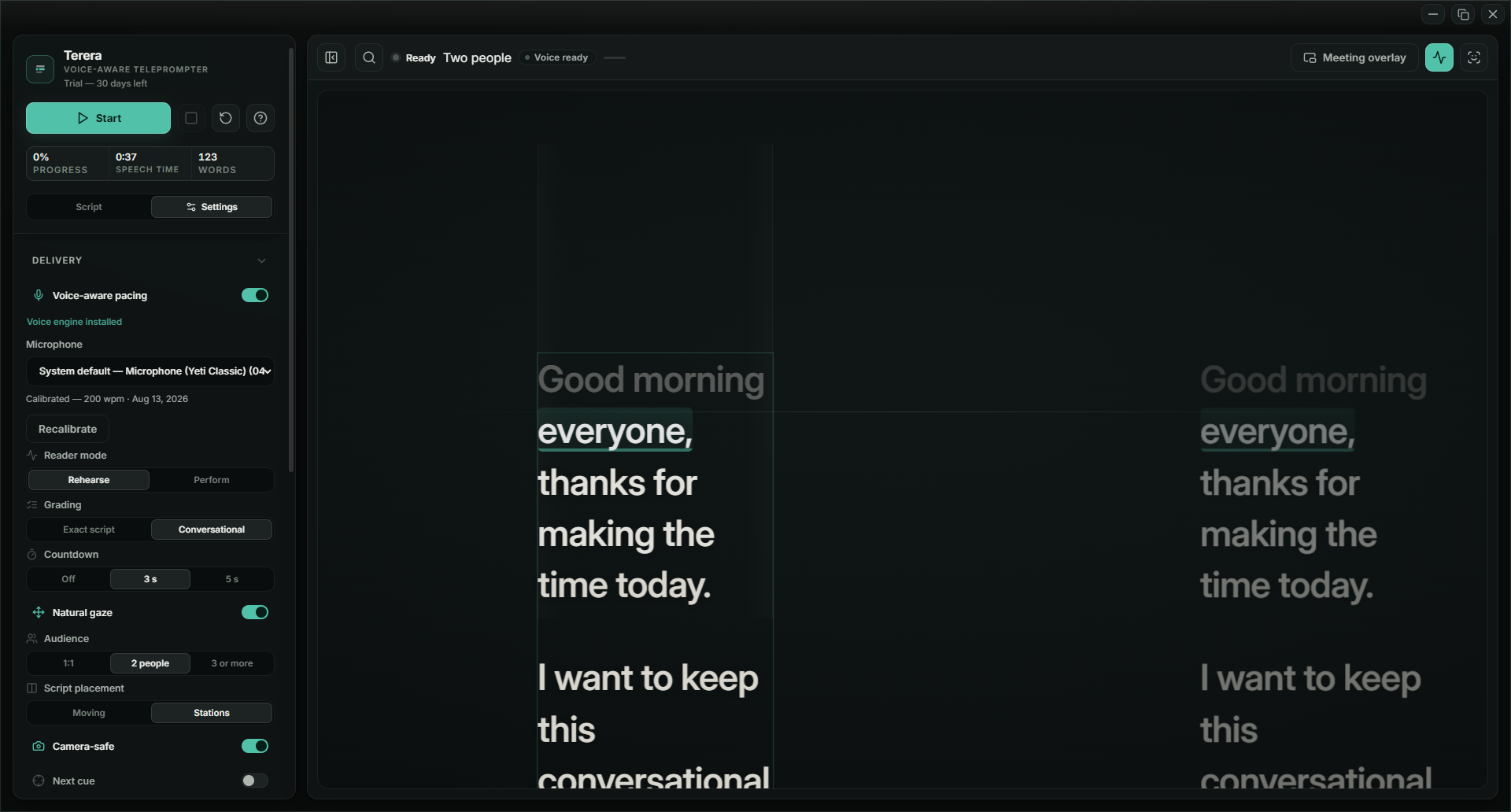
Where your eyes go depends on who's listening. One person, and they stay put. Two, and you turn between them. A room, and you make the tour and come back. A gaze has choreography — nobody wrote it down, but everyone can tell when it's wrong.
Terera drives the script along those same paths, so the text is always sitting exactly where your eyes were about to go. You just talk, and it keeps up.
Stop, and it assumes you're listening. Wander off to make the better point that just occurred to you, and your place is kept until you land back on the page.
You talk. It follows.
And how it moves is yours to change — pattern, reach, pace, all of it.
Delivery is what they remember.
A camera lens is a terrible audience. It never nods, never leans in, and it notices everything — especially the flat, left-to-right flicker of a person reading. People are tuned for gaze the way they are tuned for pitch: we register a degree of drift before we can name it, and we quietly file it under not quite true.
That is the teleprompter's original sin. It solved reading, and broke looking — it makes honest people look like they are performing honesty.
Terera's answer is mechanical, not cosmetic. It routes your words along the paths eyes actually travel, and it listens as you speak, so the script keeps your pace instead of setting it. The reading disappears. The looking remains.
What it actually does.
A simulation of the real thing · hold to speak, release to stop, leave the script and come back
This is the real thing.
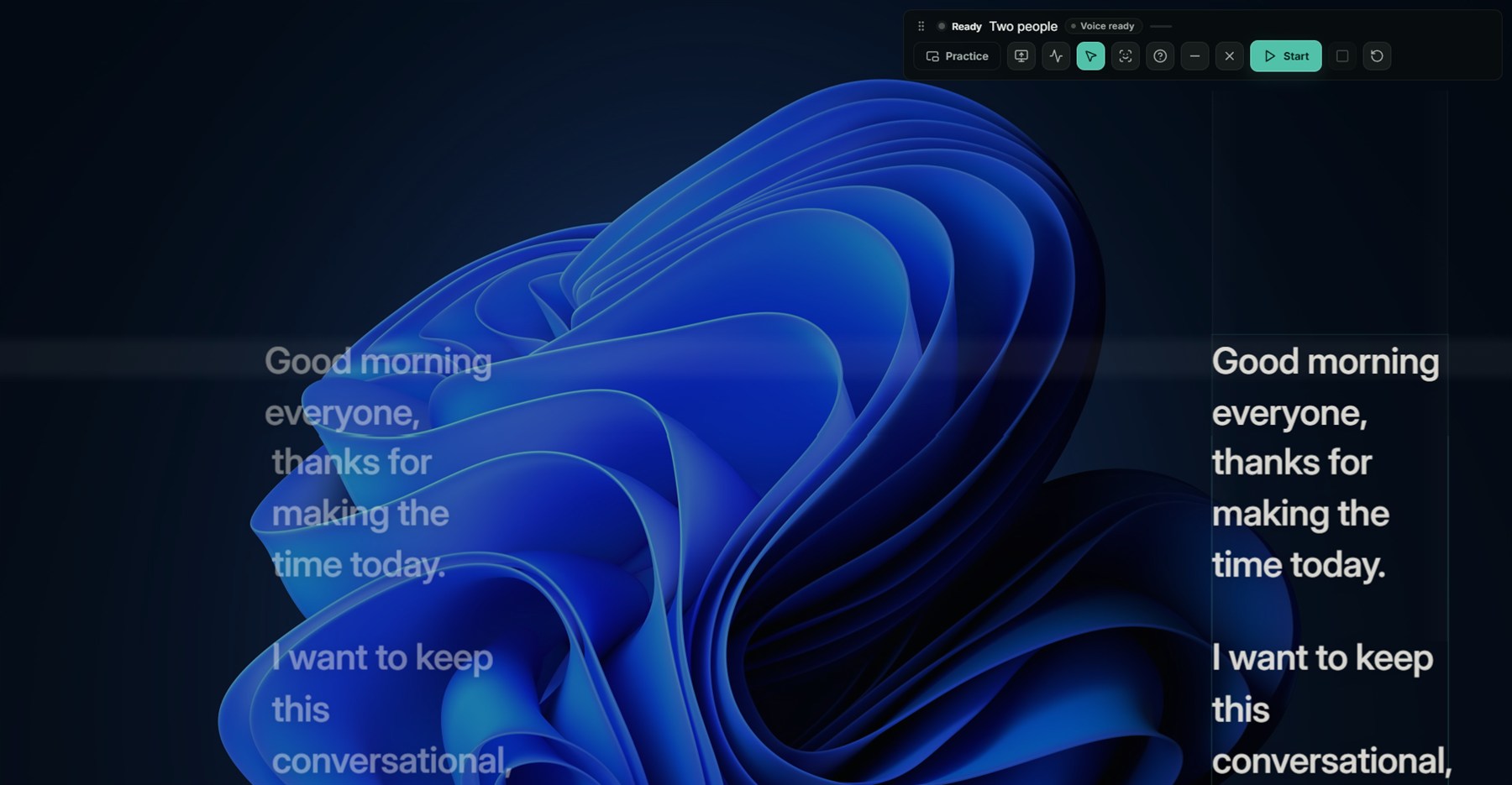
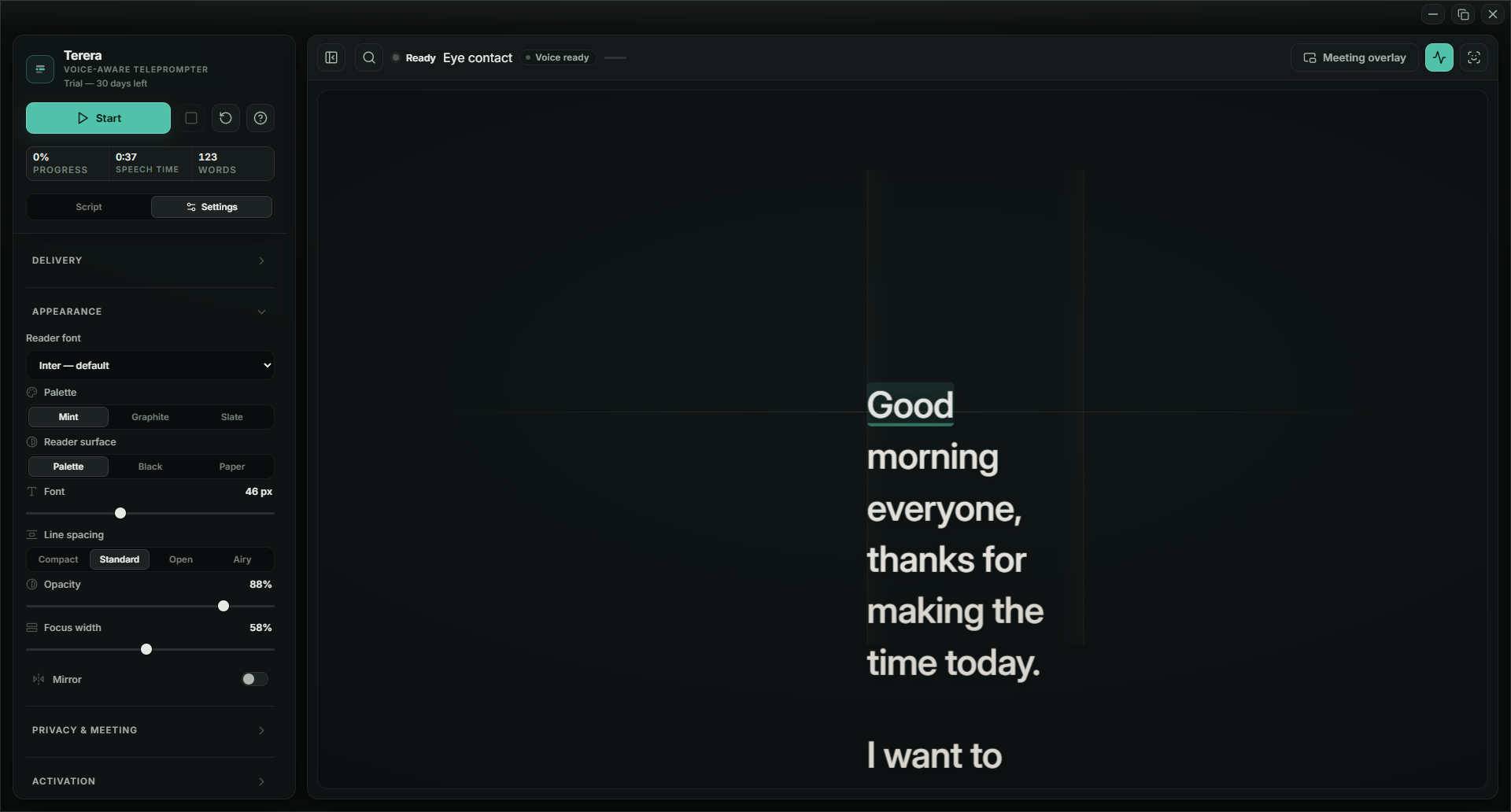
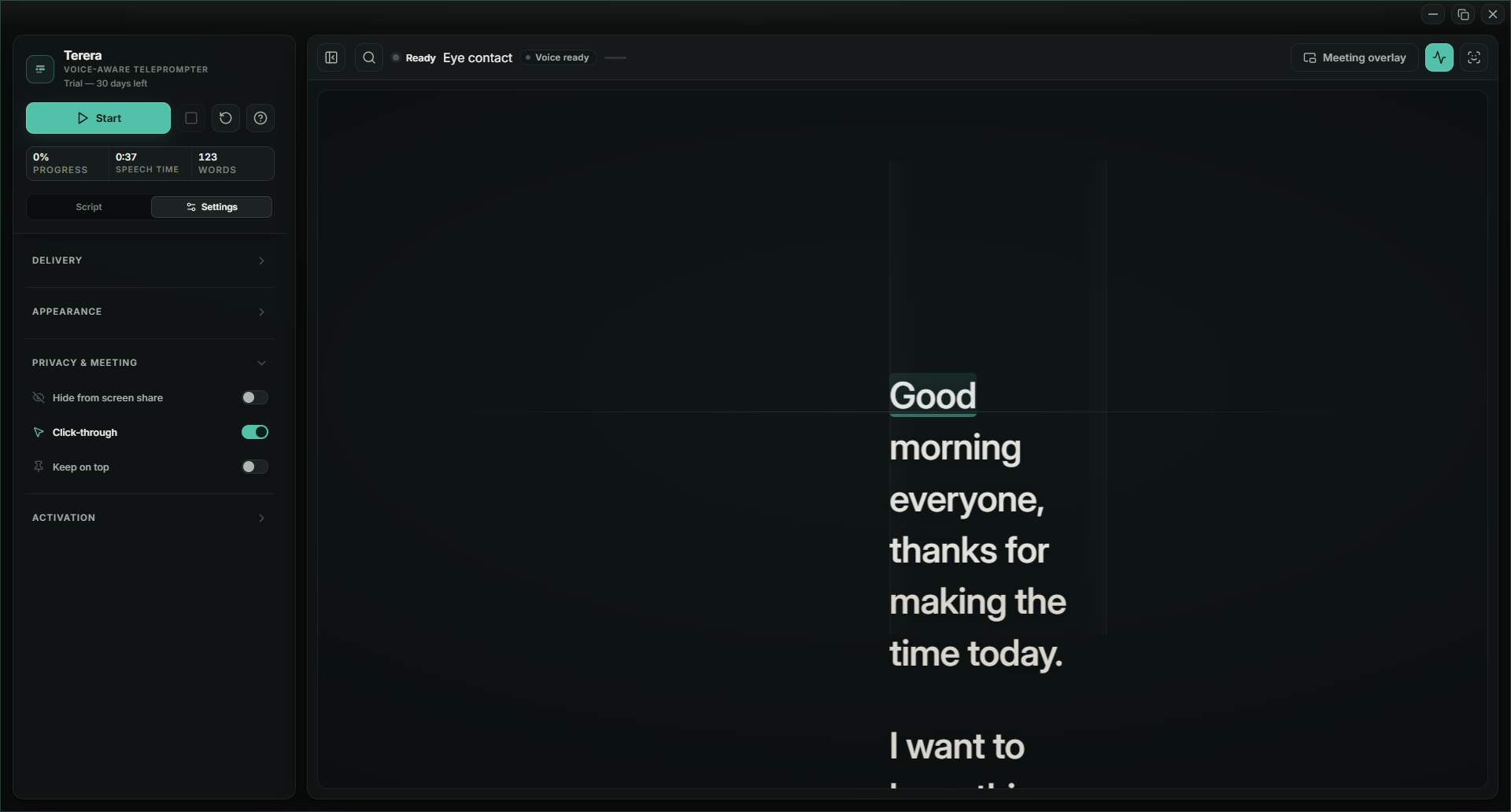
Pictured: reading. It doesn't look like it — that's the point. The first shot is Terera floating over a desktop in two-people mode, click-through, on top of whatever you're presenting from. From there you make it yours: the font, the colours, how far it moves, whether it moves at all.
Terera is Shona. It means listen — and pay attention.
An instruction to the software, not to you. It listens so you can stop managing a screen and talk.
Paste, speak, keep the take.
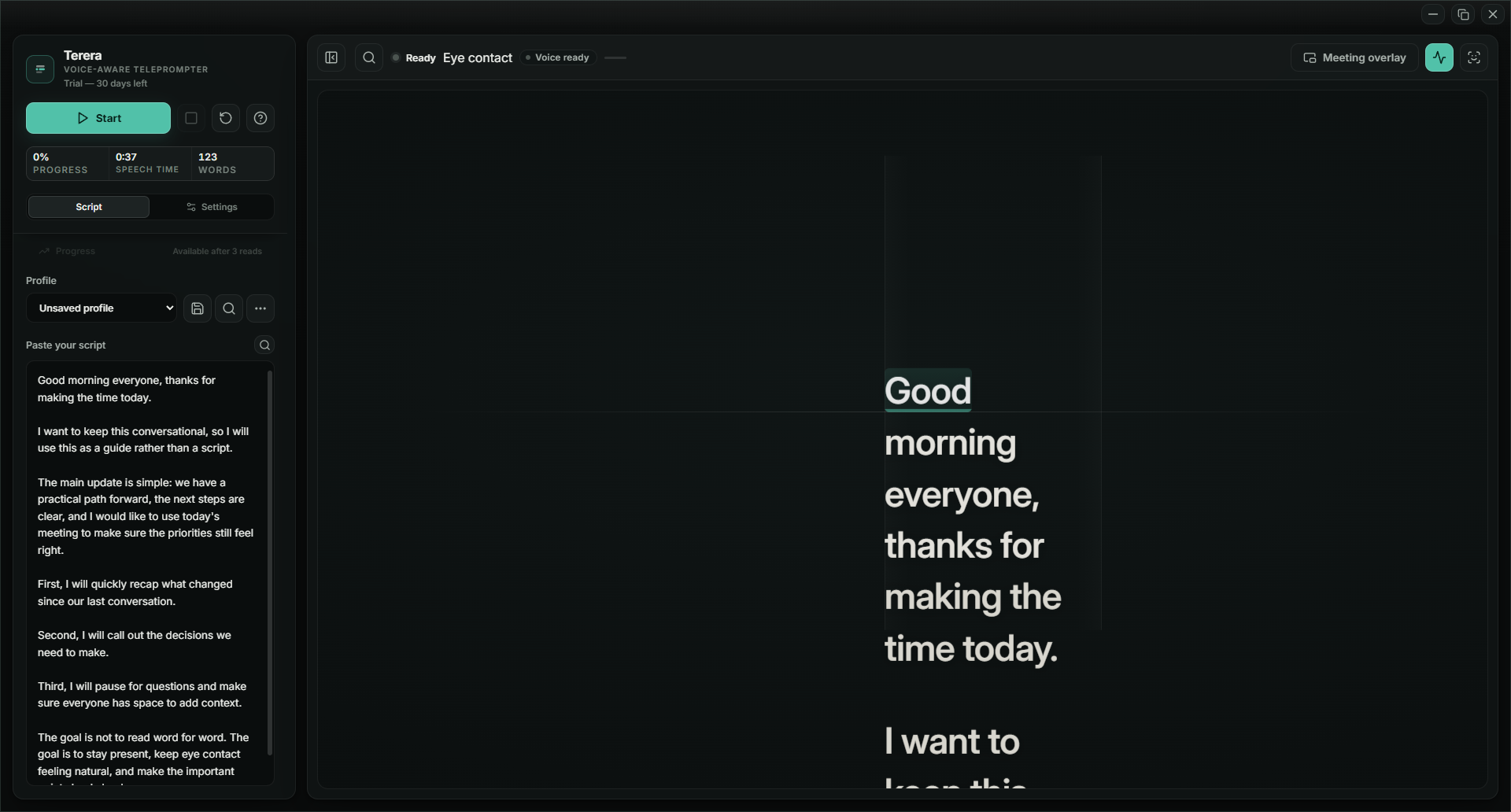
It listens on your machine and matches your words to the page. The setup is pasting; the skill is one you already have.
Left to right is a tell.
Eyes that sweep left to right and snap back are reading. Everyone watching knows it, even if they couldn't say why. The fixed stare is the other tell — pin the script under the lens and your eyes are steady, but locked on one spot, and nobody stares at one spot for a whole meeting.
Terera moves the transcript to where your eyes would go anyway — to the people on the call.
So the movement just looks like you, talking to people.
Room mode sweeps the screen the way your eyes would cross a room — shown here over a four-person grid. You choose the mode; it never sees your call.
Your desk, your rules.
One payment. Not a subscription.
One payment, three of your own machines, and a year of updates. When the year is up, nothing stops working.